


In 10 steps
to your own brewery
The following aspects need to be clarified before you can start:
- How many liters of beer do I want to brew?
- How much space do my systems require?
- What infrastructure is necessary?
- What design should my system have?
- Should my system work fully or semi-automatically?
- Which marketing concept do I have to come up with?
- Do I need staff?
- How high are the investment costs?
- What will the timing of the acquisition be?
- Which legal requirements do I have to meet?
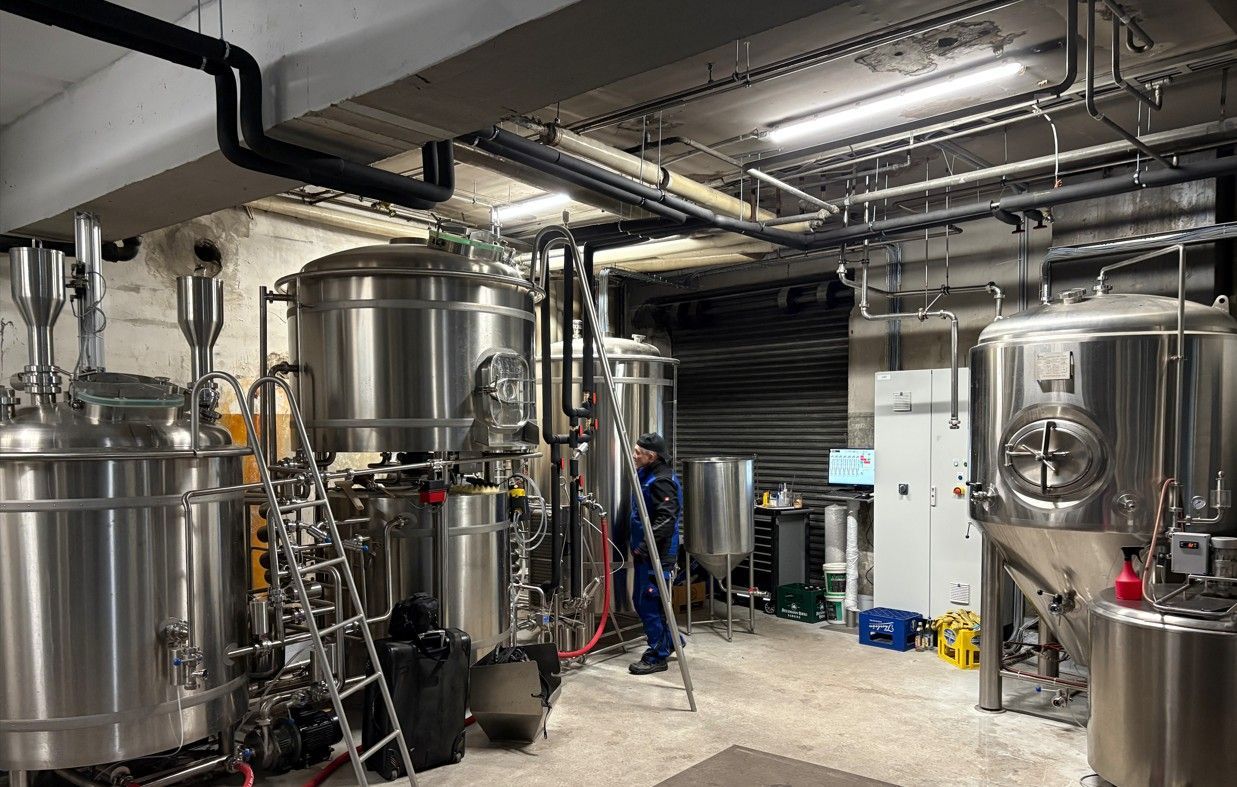
Determination of the size of your brewery
When customizing a new microbrewery first of all it is important to define the size of the brewhouse.
A “BRAUHAUS 300” for example is a small brewhouse with 300 litres of wort per brew = about 8 hours (3HL). Further options are:
- BRAUHAUS 300 (3 HL)
- BRAUHAUS 500 (5 HL)
- BRAUHAUS 1000 (10 HL)
- BRAUHAUS 2000 (20 HL)
- BRAUHAUS 3000 (30 HL)
- BRAUHAUS 5000 (50 HL)
Depending on the size of the brewery you can determine how often to brew per week. The possibility of subsequent extension of the brewery allows you to double and even quadruple your daily production.
Our pricelist offers a detailed investment cost breakdown for various capacities.
NEXT, FERMENTATION AND STORAGE CAPACITIES HAVE TO BE DEFINED…
This measure shows size and number of fermentation and storage tanks that will be needed. Therefor it is necessary to define the annual amount of beer that should be sold. Due to the fact that your business might grow over time, space for an extension and additional tanks is always included in our plans.
There are various types of fermentation and storage cellars that are determined by the range of beers produced.
Planning of your brewery
Step 02
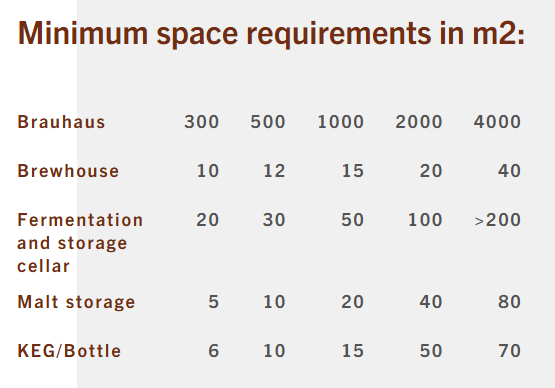
How much space do my systems require?
Planning and space requirements
We have already planned and realised a great number of various different installations and formations when it comes to our breweries.
No matter if “all in one room” or “divided between several rooms” – we have done it all.
Based on a layout plan of the building we develop several different installations and formations with our clients. Entrance widths and ceiling heights are important to consider during this process.
Step 03
What infrastructure is necessary?
Required brewery – infrastructure
Electrical capacitance:
- BRAUHAUS 300 30 kW
- BRAUHAUS 500 40 kW
- BRAUHAUS 1000 80 kW
- BRAUHAUS 1500 120 kW
- BRAUHAUS 2000 160 kW
- BRAUHAUS 4000 320 kW
Wastewater
Wastewater produced by microbreweries is just slightly contaminated (less than wastewater produced by gastronomy) and can easily be disposed by municipal sewage plants. However, the daily procedure of brewing and the related water use of a microbrewery have a great impact on the overall water consumption – and therefore also on the amount of wastewater produced by the brewery.
For this reason we try to focus on teaching our clients and brewers how to work efficiently and sustainably in this area.
Exhaust air
The exhaust air mainly consists of exhaust steam from the brew kettle. FLECKS breweries have a built in steam condensation unit that vacuums and then condenses steam beginning with temperatures at 85°C.
Water and water treatment
Water is an essential ingredient when brewing beer. Referring to the amount of beer produced, you will need about three to four times the amount of water. If you send us water analysis data of your home town, we are able to provide information about what kind of water treatment is the most appropriate for you.
Waste
Solid waste consists of draff which is about 1,8 times heavier than the weight of the used malt.
This residue of the malt (wet grains) remains in the lauter tun and is then removed through the FLECKS draff discharge device (lateral discharge over a slide into storage units or with a draff pump into transportation facilities and hangers)
The optimal exploitation is to use the draff as fodder for pigs, cattle or sheep. Therefore farmers are often very happy to receive this brewery “waste”. Furthermore it is possible to make a special draff bread, containing about 20 to 30 percent of this malt residue.
Step 04
What design should my system have?
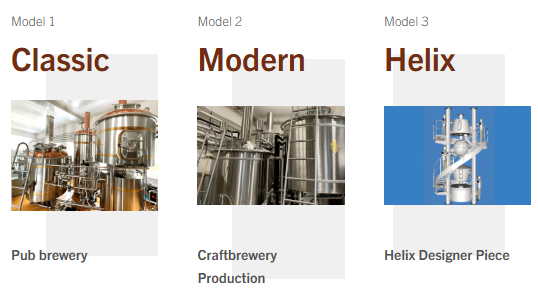
Design
What is very much appreciated at the FLECKS breweries is that they not only deliver the best beer, but can also come up with an elegant design.
Regardless of whether as a pure stainless steel brewing machine or as a fully or partially copper-plated brewing system - the FLECKS craft beer systems are always immediately recognizable by their functional and attractive design.
Step 05
Should my system work fully or
semi-automatically?
Automation
Fully automated
All valves and drives are regulated and controlled by a Simatic S7 control system.
Grinding malt, mashing, mash programmes (infusion and decoction), purifying, boiling of wort, hop dosages, whirlpool and cooling of wort and cleansing are all fully automated.
Furthermore fermentation and storage tanks are also fully automated when it comes to controlling (temperature and pressure). Simultaneously the produced amount of carbon dioxide is being recorded.
Temperature, quantities and error system reports are being created and saved automatically. In case of a disturbance the brewer is informed via sms.
ADVANTAGES
- Maximum brewing convenience
- Brewing with a maximum degree of automation
- Professional control based on SIMATIC
- Energy management through hybrid heating
- Two brews are brewed a day
- Manless brewing at night
- Highest quality control through remote maintenance and brewing protocol
Semi-automatic
A partially automated brewery is controlled by hand vales, while various mash, cooking, and fermentation programmes are automated.
Advantages:
- Easy to use craft brewery
- Programmable thermostats on data bus
- PC interface and remote maintenance
- Partly automated
- Focus on making beer by hand
Step 06
Which marketing concept do I have to come up with?
Marketing concept
Choice of type of brewery/viewing brewery with pub/ sole production brewery.
We support you when it comes to realizing your concept and are eager to help with our experience in implementing pub and restaurant breweries or production breweries.
After having installed and developed over 110 breweries in 35 different countries worldwide, we have acquired a lot of know-how that we want to share.
Distribution of bottled beer, kegs or directly served to customers.
We provide keg cleansing machines and small bottle fillers or recommend an integrated bottling line (Labelling, cleansing, evacuating, filling and capping)
Choice of beer type
You probably already have an idea about the type of beer you want to brew. You might even have recipes and varieties that work well for you. Our task is to adapt your recipes for our FLECKS breweries.
Step 07
Do I need staff?
Personnel Requirement – we make brewers
The required personnel depends on whether your brewery is fully or partially automated and on the annual production quantity.
Small breweries (3-10 HL) usually simply require one brewer with occasional support staff. Fully automated breweries only need half as much personnel. Bottling the beer is the task that demands the most additional support.
We help you become a successful brewer
- We give you all the know-how you need
- We show you how to do necessary maintenance work
- Furthermore we offer an online service (modification of recipes, new beers, support)
STEP 08
How high are the investment costs?
Costs of investment
Our price lists are updated regularly to enable a realistic insight into costs of investments.
Many of our current clients value this transparency when it comes to our pricing and profit from our rapid processing of the lists when prices change.
STEP 09
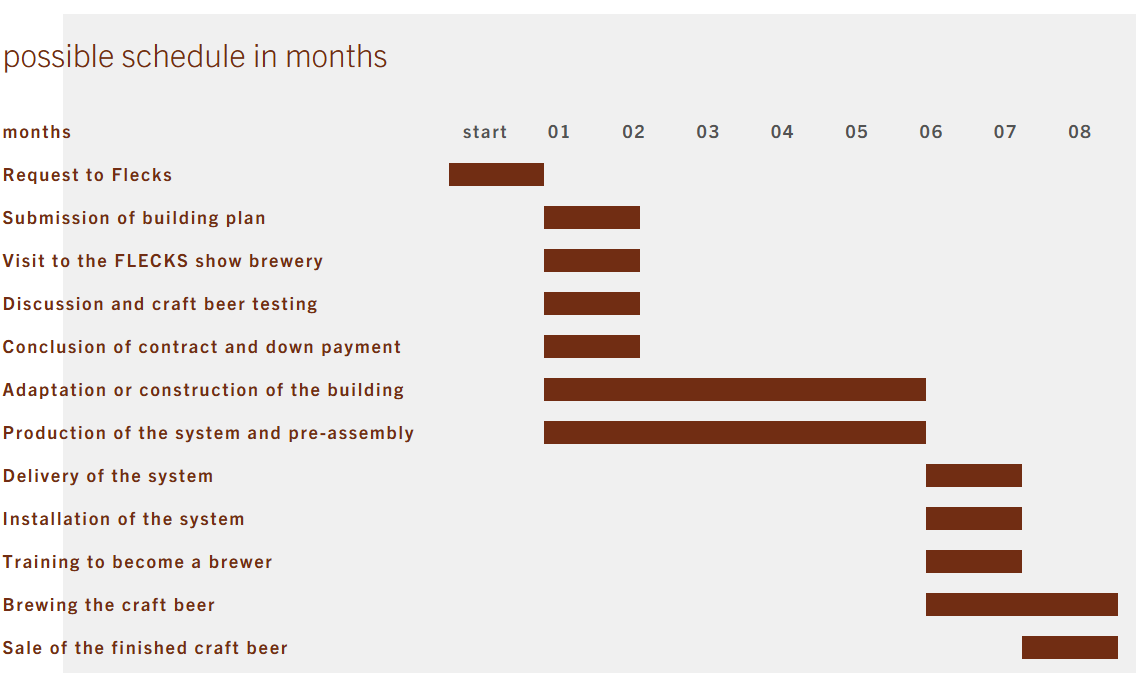
What will the timing of the acquisition be?
time schedule
STEP 10
Which legal requirements do I have to meet?
State approval
Different in all countries, but definitely doable:
Technical approvals, CE, TÜV, trade authority
We deliver technical documents and certificates for local permits.
Hygiene check
Inspections of the hygienic situation by the government are very common. Therefore we offer support when creating your HACCP concept (Hazard Analysis and Critical Control Points).
Beer tax and customs authority
We recommend to register at the responsible tax authority for beer tax earliest possible.